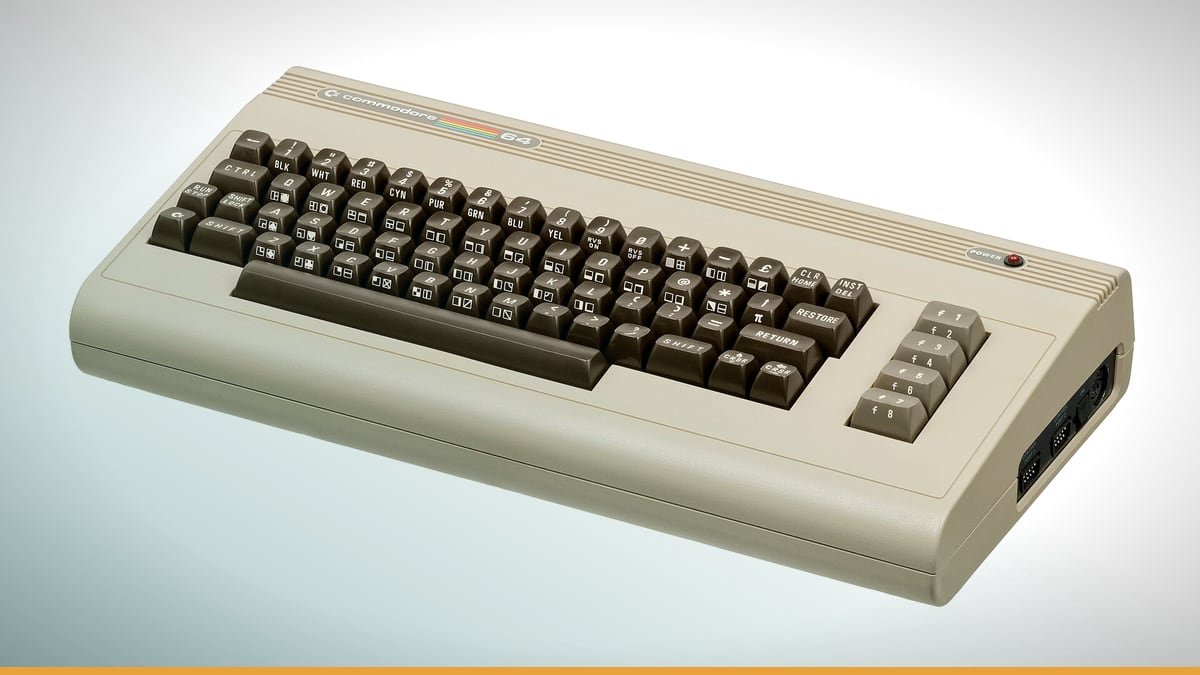
Header image: Commodore-64-Computer-FL by Evan-Amos, Public domain, via Wikimedia Commons — cropped to 16:9 and colour-adjusted.
Key takeaways
- Home computer users had to understand machines to make them work
- Modern devices seal away the inner workings
- Friction and failure built deep technical literacy
The home computer is dead. Not the idea—computers in homes are everywhere now—but the kind of machine that defined an entire cohort. The ones with manuals thicker than a phone book, floppy drives that jammed if you so much as blinked, and BIOS screens that looked like ancient scripture. These weren’t appliances. They were puzzles. And when they vanished in the early 1990s, they took something irreplaceable with them: a generation’s worth of hands-on, break-it-to-learn-it computer literacy.
The author calls this cohort the "home computer generation"—a group straddling Gen X and Millennials. They weren’t just the first to grow up with computers in their houses. They were the last who had to understand how those computers worked just to use them. That difference—between using technology and wrestling with it—is the divide that shaped modern computing.
Who Were These People?
They weren’t defined by birth years. They were defined by experience. The home computer generation had their formative years when machines like home computers turned bedrooms and basements into labs. These weren’t consumer electronics. They were projects. You didn’t just turn them on. You fought with them. You fixed them. And if you were lucky, you got them to do what you wanted before bedtime.
Before them, programming was a job. Mainframes and terminals were for engineers, scientists, and data-entry clerks. Their parents might have used computers at work, but only through punch cards or dumb terminals—tools that hid the machine itself. The home computer flipped that. Suddenly, the computer was yours. And if it didn’t work, the only person to blame was the one staring at the screen.
After them? Millennials. The first generation to grow up with computers in their homes—but not the same kind. By the early 1990s, the home computer market segment had vanished. IBM compatibles became more affordable. Fourth-generation video game consoles offered improved graphics. The idea of a "home computer" as a distinct category faded into history. Millennials inherited a world where computers were just another consumer product—polished, sealed, and designed to "just work. " And that, as it turned out, was the problem.
The Forced Education: How Broken Games Built Literacy
The home computer generation didn’t choose to learn how computers worked. They had to. There was no IT department to call when your game wouldn’t load. No customer support line to walk you through driver conflicts. If your software crashed, the only person who could fix it was you.
Memory management? On a Commodore 64, you had 64KB of RAM—less than a single JPEG today. If your game needed more, you got creative. You loaded parts of the program in chunks, swapped them out, and hoped the whole thing didn’t collapse. Driver conflicts? Modern OSes handle this automatically. On a home computer? You spent hours tweaking CONFIG.SYS and AUTOEXEC.BAT, adjusting IRQ settings, crossing your fingers that your sound card and graphics card wouldn’t start screaming at each other.
And the software. Cracked games often needed hex edits to bypass copy protection. Modems required manual initialization strings. Hard drives had to be low-level formatted before use. Every step was a lesson in how the machine actually worked. You couldn’t google the answer. You had to figure it out.
Datagubbe puts it bluntly: "The home computer generation had little choice but to gradually absorb computer literacy during years of trying to get their games and programs to run. " That’s the key. This wasn’t education by design. It was education by necessity. And it produced a generation that didn’t just use computers—they understood them.
The Death of the Home Computer: What Really Changed?
By the early 1990s, the home computer was gone. Not because people stopped buying computers, but because the category ceased to exist. IBM-compatible PCs became affordable enough to replace them. Consoles like the SNES and Sega Genesis offered better graphics and simpler experiences. Why wrestle with a command line when you could pop in a cartridge and play Sonic the Hedgehog without a single error message?
The software market played its part. Writing one’s own software programs was more common during the home computer era. The incentive to write one’s own software programs diminished. Why bother writing your own programs when commercial alternatives existed? The incentive to tinker vanished.
And then there was the criticism. Some dismissed home computers as a fad. There was a general feeling that there was really no practical purpose for a computer in the home. Why would anyone need a machine that required hours of configuration just to balance a checkbook? Better to wait for something that worked out of the box.
They got their wish. And in the process, they lost something irreplaceable.
The Professionalization of IT: From Survival Skill to Career Path
For the home computer generation, computer literacy wasn’t a career path. It was a survival skill. You learned how computers worked because if you didn’t, they wouldn’t work for you. There was no alternative.
Today? IT is just another job. Datagubbe notes that succeeding generations "consider a job in IT as just another career path among others. " That’s not a knock on modern IT professionals—they’re often highly trained and skilled. But the mentality is different. For the home computer generation, IT wasn’t a profession. It was a way of thinking.
The difference is subtle but profound. When IT is a career, you solve problems within the constraints of your job description. When IT is a skill, you solve problems because the problem exists, and the only tool you have is your own ingenuity. The home computer generation didn’t wait for someone else to fix their machines. They fixed them themselves.
That mindset didn’t just disappear. It was designed out of modern computing. Today’s devices are sealed. App stores are walled gardens. Customer support is outsourced. The message is clear: You don’t need to understand this. Just use it.
And so, a generation that could debug a memory leak in their sleep has been replaced by one that can order groceries with a voice command—but couldn’t tell you how the voice command actually works.
The Millennial Paradox: More Computers, Less Literacy?
Millennials were the first generation to grow up with computers in their households. By the numbers, they should be the most computer-literate cohort in history. And yet.
Millennials are described as a less patient and slightly more entitled generation than the ones preceding it. That’s not a moral failing. It’s a logical outcome. If technology is designed to "just work," why would you tolerate anything less? The home computer generation expected their machines to break. Millennials expect them to work flawlessly—and when they don’t, the solution is to replace them, not repair them.
There’s an irony here. The home computer generation had less access to technology, but they understood it more. Millennials had more access, but their literacy was shallower. They knew how to use computers, but not how to control them.
That’s not a criticism of Millennials. It’s a criticism of the systems that raised them. When technology is designed to be opaque, literacy becomes a niche skill. And when literacy becomes a niche skill, the people who do understand how things work become gatekeepers—not tinkerers.
The Lost Mentality: Why It Still Matters
The home computer generation didn’t just learn how to use computers. They developed a mentality—one rooted in curiosity, problem-solving, and ownership. That mentality looked like this:
- Willingness to break things. If your game crashed, you didn’t throw the computer out the window. You poked at it until it worked again.
- Comfort with ambiguity. Why did your sound card work yesterday but not today? Who knows. But you’d figure it out.
- Seeing software as malleable. Programs weren’t black boxes. They were things you could modify, tweak, and improve.
That mentality is gone now. Today’s devices are designed to prevent you from breaking them. IT is outsourced to professionals. User agency is minimized. And the result? A generation that can use technology but can’t shape it.
The author fears this mentality is lost. And they’re right to be afraid. Because when you lose the ability to understand your tools, you lose the ability to control them. And when you lose control, you become a consumer—not a creator.
Could It Happen Again? The Limits of Modern Tinkering
Is it possible to recreate the conditions that forged the home computer generation? Could another cohort develop the same hands-on, problem-solving mindset?
No. The barriers are too high.
- Sealed hardware. Smartphones and tablets are designed to be opened only by professionals. Even laptops are increasingly glued shut.
- Walled gardens. App stores and DRM prevent users from modifying software. Want to tweak an app? Too bad. It’s locked down.
- Professionalized support. IT departments and customer service lines mean users never have to solve problems themselves.
There are exceptions. Raspberry Pi and Arduino have brought back some of the old tinkering spirit. Retro computing communities keep the flame alive. But these are niche interests, not mainstream movements. The home computer generation wasn’t a niche. It was the default experience for an entire cohort.
The question isn’t whether tinkering is still possible. It’s whether it’s still necessary. And the answer is no. Modern technology is designed to work without you understanding it. And that’s a feature, not a bug.
The Home Computer Generation’s Legacy: What’s Left?
Many of them now work in tech—carrying forward their hands-on ethos. They’re the ones who still compile their own kernels, who mod their hardware, who see software as something to be explored, not just consumed.
Their influence lingers in open-source software, in modding communities, in the hardware hackers who still refuse to accept sealed devices. But their mindset? That’s fading. The generation that grew up breaking things now builds the systems that prevent others from doing the same.
There’s an irony here. The people who learned computers by necessity now design systems that eliminate the need to learn. They’ve made technology more accessible, more reliable, and more user-friendly. But in doing so, they’ve also made it less understandable.
The lesson isn’t that modern technology is worse. It’s that literacy isn’t just about access. It’s about friction. It’s about struggle. It’s about the freedom to fail—and the knowledge that comes from picking up the pieces.
The Value of a Broken Computer
The home computer generation learned by necessity. They had no choice but to understand how their machines worked, because if they didn’t, nothing would work at all. That’s not a skill you can teach in a classroom. It’s not something you can learn from a YouTube tutorial. It’s something you absorb through years of frustration, experimentation, and—eventually—mastery.
As technology becomes more polished and less accessible, we risk losing that skill. Not the ability to use technology, but the ability to shape it. And that’s a loss we can’t afford.
The next generation of tinkerers might emerge. But they’ll have to fight harder for the right to break things. And in a world designed to prevent breaking, that’s a fight they might not win. What happens when the last person who remembers how to fix a broken machine is gone?
Leave a Reply