Tag: psychology of home

  • **What Is the Definition of “Home”? The Evidence Beyond Four Walls**

    **What Is the Definition of “Home”? The Evidence Beyond Four Walls**

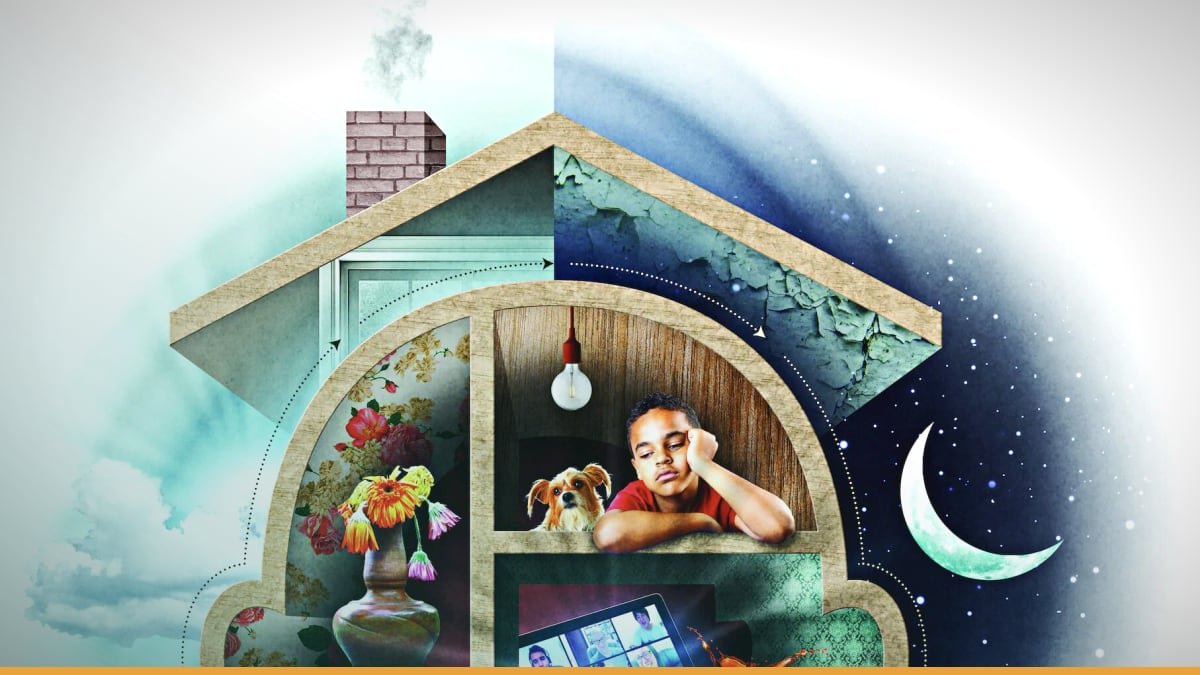
    Header image source: PDF) Beyond Four Walls’. The Psychosocial Benefits of Home: Evidence from West Central Scotland via Academia.edu via Google — cropped to 16:9 and colour-adjusted.

    Key takeaways

    • Home is a psychological contract, not just a physical structure
    • Dictionaries define home as a dwelling, but real home is where you feel safest
    • Digital spaces now serve as psychological homes for many marginalized groups

    Home isn’t a house. It’s the place where you can stumble in at 3 AM, barefoot and half-asleep, and not have to explain yourself. The light switch is always on the left. The floorboards creak in the exact same spot. The smell of coffee—or dust, or old books—hits you like a memory before your eyes even open.

    Dictionaries call it a physical residence. One dictionary defines it as "one’s place of residence or domicile. " Another definition is "the house or apartment where you live, especially with your family. " The Oxford English Dictionary defines home as a dwelling place, a person’s house or abode. But those are just the bones. The rest is messier. Home is where you feel most comfortable, loved, protected. Vocabulary. One source puts it better: "a place so profoundly familiar you don’t even have to notice it. " It’s the only concept that’s legally binding (a domicile), emotionally binding (a sanctuary), and socially binding (a site of identity). And yet, for all its weight, home is slippery. You can be home without feeling at home. You can feel at home in a stranger’s guest room, a childhood bedroom you haven’t slept in for decades, or a Discord server where everyone knows your username but not your face.

    That tension—between the dictionary’s bricks and the heart’s quiet certainty—is why the question resists a single answer. Home isn’t just a place. It’s a psychological contract, a fragile alchemy of time, memory, and unconditional belonging. And like all contracts, it can fracture, migrate, or multiply.


    The Physical Home: Why Bricks and Leases Fall Short

    The dictionary is stubborn. Home, it insists, is a structure. Dictionary. One dictionary calls it "a house, apartment, or other shelter that is the usual residence of a person, family, or household. " Legal and financial systems double down. Domicile laws tie it to tax residency, voting rights, inheritance. Mortgages and leases treat it as an asset, a line item on a balance sheet. Even the Oxford English Dictionary’s definition of home as the fixed residence of a family or household betrays a Western bias, assuming permanence where none may exist.

    But the physical definition collapses under scrutiny. Homesick children experience home as a boundary, a line between "here" and "not-here" that has nothing to do with square footage. For them, home isn’t a house; it’s a feeling of safety that can’t be replicated elsewhere. Nomads, digital nomads, refugees—all challenge the idea of a “usual residence.” For a Mongolian herder, home might be a ger (yurt) that moves with the seasons. For a truck driver, it’s the cab of their rig. For a Syrian refugee, home may be a memory, a language, or a key they carry in their pocket—the last remnant of a door that no longer exists.

    Even in stable societies, the physical home is necessary but insufficient. A house is a container; home is what happens inside it. You can own a mansion and feel homeless. You can rent a studio and feel utterly, unshakably at home. The disconnect reveals a truth: the dictionary gives us the skeleton, but the heart builds the rest.


    The Psychological Home: When Familiarity Becomes Invisible

    One definition—"a place so profoundly familiar you don’t even have to notice it"—is the most precise. It captures the cognitive magic of home: the way your brain stops scanning for threats when you’re in it. Neuroscientists would call this prediction error. In unfamiliar places, the brain is constantly calculating: Where’s the light switch? Is this floor safe? What’s that smell? But in a home, the brain defaults to autopilot. The kettle whistles before you remember putting it on. You reach for a glass without looking. The creak of the stairs is a lullaby, not a warning.

    This is why travelers often feel most “at home” in places where they’ve repeated small rituals—the same café every morning, a familiar route to the gym, the way the bartender remembers their drink. The not-home-ness of a place diminishes not because the place changes, but because you learn to predict it. One source puts it bluntly: "Feeling at home in non-native places means the not-home-ness of those places has diminished. "

    But there’s a dark side. If home is where prediction error is lowest, dementia patients may “lose” home not because the house changes, but because their brains can no longer predict it reliably. A woman with Alzheimer’s might wander her childhood home and feel just as lost as she would in a hotel. For some, home is non-transferable. Some people never find another home after leaving their first one. Their brain’s prediction model is locked to a single place, and no amount of time or effort can rewrite it.


    Home as Identity: The Mirror and the Window

    One definition cuts deeper: "Your home is your identity and your possibility to be open to others. " This framing reveals home as both a mirror and a window.

    The mirror function is about reinforcement. The objects, layout, and routines of a home encode identity. A minimalist’s home signals discipline. A hoarder’s home signals chaos, or perhaps a refusal to discard memories. A religious household’s home might feature icons, prayer rugs, or mezuzahs—physical markers of belief. Even the absence of objects tells a story. A bare apartment might signal transience, depression, or a deliberate rejection of materialism.

    The window function is about extension. "When you invite people to your home, you invite them to yourself. " This is why home invasions are uniquely traumatic—they violate not just a physical space, but psychological sovereignty. Home is the only place where social masks are optional. You can cry in your kitchen. You can dance in your underwear. You can leave the dishes in the sink for a week. When you invite someone in, you’re saying: This is who I am when no one’s watching.

    But technology is complicating this dynamic. Smart home devices are now participants in the identity exchange. This raises a question: Can a device make a house feel more like home, or does it just simulate familiarity? If home is where you stop noticing your surroundings, does a smart thermostat that adjusts itself deepen that autopilot state—or create an uncanny valley, where the house feels almost like home, but not quite?


    Home as Sanctuary: The Unconditional "They Have to Take You In"

    One line—"Home is the place where, when you have to go there, they have to take you in"—defines home as a refuge of last resort. This aligns with attachment theory: home is the secure base from which we explore the world and return to recharge. But it’s also a moral contract. One variation—"Home isn’t where you’re from, it’s where you find light when all grows dark"—suggests that home’s true function is revealed under duress.

    A house becomes a home when it absorbs suffering. When you’re sick, home is where you don’t have to explain your symptoms. When you’re grieving, home is where you don’t have to perform strength. When you’re broke, home is where you don’t have to pretend you’re fine. This is why homelessness is more than lacking shelter—it’s the absence of unconditional refuge. Even people in mansions can be “homeless” if they fear rejection (e.g., LGBTQ+ youth disowned by families).

    The digital parallel is striking. Online communities—Reddit, Discord, Facebook groups—now serve as psychological homes for marginalized groups. The rules of engagement (moderation policies, pinned resources, shared language) mimic the structure of a sanctuary. For someone who feels unsafe in their physical home, a private Discord server might be the only place where they “have to take you in.”


    The Fracturing of Home: When It Splinters or Migrates

    The idea of a single home is a modern Western construct. Historically, people had multiple homes—ancestral villages, seasonal migrations, boarding schools. Today, dual-income families, expats, and digital nomads often split time between physical homes and psychological homes.

    The observation that "not-home-ness diminishes" in new places suggests that home is not fixed but earned. The physical home may change, but the psychological home lingers. For some, home migrates. For others, it fractures.

    Divorce can shatter home. A child of divorce might feel homeless in both parents’ houses—one too quiet, the other too loud. Displacement can erase home entirely. A refugee might carry home in their body (language, recipes, scars) but lack a physical space to return to. Dementia can dissolve home. A woman with Alzheimer’s might forget her house but remember the smell of her mother’s kitchen—a home that no longer exists except in her mind.

    Technology is creating new sites of psychological home. VR homes and digital twins of physical homes are emerging as hybrid sanctuaries. For some, a Minecraft world or a Discord server may feel more like home than their apartment. These spaces replicate the mirror and window functions—they reflect identity and extend it to others—but they lack the physicality that anchors many people’s sense of home.


    The Future of Home: AI, Nomadism, and the Death of Permanence

    The definition of home is already shifting, and the next decade will accelerate the change.

    AI and automation will redefine home in three ways. First, predictive homes: smart systems that anticipate needs (adjusting lighting, ordering groceries, playing your favorite playlist) may deepen familiarity—or create uncanny valley discomfort if they overstep. If your fridge orders milk before you realize you’re out, does that enhance autopilot—or make the home feel less like yours? Second, remote work and nomadism: if home is where you feel unconditionally accepted, then co-working spaces, Airbnbs, and van life may start to compete with traditional homes for psychological belonging. The rise of “workations” (working remotely from vacation destinations) blurs the line between home, office, and escape. Third, digital homes: as VR and AR mature, online spaces (Fortnite concerts, virtual offices, VR chat rooms) may become hybrid homes—places where people gather, work, and socialize without physical constraints. For Gen Z and Gen Alpha, home might mean a group chat, a Twitch community, or a shared world in Roblox.

    Climate change will force a reckoning with the physical definition of home. If sea levels rise or wildfires make regions uninhabitable, home may become a memory. Displacement will test the psychological definition—can home migrate with you, or will it die with the land?

    Generational shifts will redefine home as a network rather than a place. For Gen Z and Gen Alpha, “home” might mean a Discord server where they game with friends, a Twitch channel where they stream their lives, or a shared world in Minecraft where they build and explore. These spaces replicate the mirror and window functions—they reflect identity and extend it to others—but they lack the physicality that older generations associate with home.


    The Unanswerable Question: Why "Home" Resists Definition

    Home is a verb, not a noun. It’s something you do—create, maintain, adapt—rather than something you have. It’s a relationship, like love or trust, existing in the interaction between person and place. A house is just a house until someone imbues it with meaning.

    But home is also a privilege. The ability to choose where and how you live is unevenly distributed. For some, home is a luxury. For others, it’s a trap. For the lucky, it’s a sanctuary. For the displaced, it’s a ghost.

    The dictionary gives us the skeleton. Psychology gives us the flesh. But the heart of home—that quiet certainty, that unshakable rightness—remains deliberately slippery. Because home is the last frontier of the self. It’s where body, memory, and identity intersect. And that’s too personal for any definition to pin down.

    So what is home? It’s the place where you don’t have to explain yourself. Where the brain stops worrying. Where you can be ugly, tired, broken, or brilliant—and still belong.

    But here’s the real question: What happens when home isn’t a place at all?

  • **What Is a Home?: The Evidence Behind Its Many Meanings**

    **What Is a Home?: The Evidence Behind Its Many Meanings**

    Header image source: How to Build a Home in Texas – The Architects Diary via The Architects Diary via Google — cropped to 16:9 and colour-adjusted.

    Key takeaways

    • Home blends physical space, psychological sanctuary, and personal sovereignty
    • Home functions as a mental category separating ‘here’ from ‘not-home’
    • Home is where authenticity flourishes and memories accumulate

    A home is not just four walls and a roof. It’s where you organise your mind, assert sovereignty, build relationships, and store your past—all at once. The evidence is clear: home blends ownership, safety, and self-expression into something far more complex than shelter. The dictionary defines it as "one’s place of residence or domicile. " A legal definition describes it as "a space used as a permanent or semi-permanent residence. " But the real definition? That’s written in how we live, how we feel, and what we refuse to let go.


    The Direct Answer: What the Evidence Actually Says

    The dictionary definition is clinical: "one’s place of residence or domicile. " That’s the baseline. A home is a place—a structure, an address, a legal entity. But the evidence doesn’t stop there. Wikipedia expands it: "a space used as a permanent or semi-permanent residence for human occupants and sometimes companion animals. " Already, it’s stretching. It’s not just about humans. It’s about the creatures we choose to share our lives with. My dog doesn’t care about property deeds, but he knows which couch is his. That couch is part of what makes this place home.

    Then there’s the psychological layer. The Smithsonian calls home "a way of organising space in our minds, distinguishing between home and not-home. " That’s the critical shift. Home isn’t just a location—it’s a category. It’s the mental folder where we file everything that feels like ours, whether that’s a childhood bedroom, a rented apartment, or the backseat of a car during a cross-country move. The brain doesn’t just recognise home; it categorises it, separating it from the rest of the world.

    The emotional definitions are where things get messy. Habitat for Humanity says home is "a safe haven and comfort zone where people live with families, pets, and enjoy time with friends. " That’s not just about shelter. It’s about belonging. Stories of Our Lives pushes it further: home is "wherever you feel accepted and can be your authentic self. " Another quote from the same source calls it "a little slice of the world that belongs to you personally. " That’s sovereignty. That’s agency. You don’t just live in a home—you claim it. You shape it. You defend it.

    So what’s the synthesis? A home is both a physical location and a psychological state. It’s the intersection of where you are, who you are, and what you own—whether that ownership is legal, emotional, or just stubborn. The evidence doesn’t let us simplify it. It forces us to hold all these definitions at once.


    Home as a Physical Space: The Architecture of Belonging

    At its most basic, a home is a structure. Four walls, a roof, a door that locks. Wikipedia’s definition—"a space used as a permanent or semi-permanent residence for human occupants and sometimes companion animals"—covers the functional minimum. But Merriam-Webster’s phrase "a place to call home" adds something crucial: intentionality. A home isn’t just a space you occupy. It’s a space you claim.

    That claim starts with the basics. Shelter from the elements. Privacy from the outside world. Control over who enters and who doesn’t. But the evidence expands it. Habitat for Humanity’s framing—"where people live with families, pets, and enjoy time with friends"—positions home as a shared space. It’s not just about the individual. It’s about the network of relationships that unfold within those walls.

    The inclusion of companion animals is telling. A home isn’t just a human construct. It’s a multispecies one. My cat doesn’t care about the mortgage, but she knows which windowsill is hers, which blanket she’s allowed to knead, and which human is responsible for opening the treat bag. That shared understanding—between species, between roommates, between partners—is part of what turns a house into a home.

    But what about spaces that don’t fit the traditional mould? Nomadic cultures have been calling portable structures "home" for centuries. A yurt, a caravan, a houseboat—they all serve the same function: shelter, privacy, and a claim on a piece of the world. The physical form is flexible. What matters is the intent. You don’t just live there. You call it home.


    Home as a Psychological Framework: The Mental Map of "Here" vs. "Not Here"

    The Smithsonian’s definition—"a way of organising space in our minds, distinguishing between home and not-home"—hits hardest. Home isn’t just a place. It’s a mental category. The brain doesn’t just recognise home; it files it separately from everything else.

    Think about how you navigate the world. You don’t just know where your home is—you know where it isn’t. The office is not-home. The café is not-home. Even a hotel room, no matter how comfortable, is not-home. That distinction isn’t just about physical distance. It’s about psychological boundaries. Home is where the rules are different. Where you don’t have to perform. Where you can leave your shoes in the middle of the floor and your dishes in the sink.

    Those boundaries aren’t just physical. They’re social. Who’s allowed in? Who’s not? Who gets a key? Who gets a hug? Home is where the social contract shifts. Strangers become guests. Guests become family. Family becomes yours.

    And those boundaries aren’t static. They’re temporal. A childhood home might still feel like home decades later, even if you haven’t lived there in years. A friend’s couch might feel like home after a few weeks of crashing there. A hotel room might never feel like home, no matter how long you stay. The brain adapts—slowly, grudgingly, or not at all.

    The neuroscience here is implied but powerful. The brain’s default mode network—the part that activates when you’re daydreaming, reminiscing, or just being—treats home as an anchor. It’s the mental "here" against which everything else is measured. That’s why displacement—whether from war, gentrification, or personal crisis—feels like more than just losing a roof. It’s losing a mental coordinate.


    Home as Personal Sovereignty: The Right to Define "Mine"

    One of the sharpest definitions comes from Stories of Our Lives: "A little slice of the world that belongs to you personally. " That’s not just about ownership. It’s about agency. A home isn’t just a place you live. It’s a place you control.

    That control can take many forms. Legal ownership is the most obvious. A deed, a mortgage, a lease—these are the bureaucratic ways of saying this is mine. But the evidence shows it’s deeper than that. Renters can call a space home just as fiercely as homeowners. The difference isn’t in the paperwork. It’s in the claim.

    That claim is cultural. In nomadic societies, home isn’t tied to a fixed location. It’s tied to mobility. A yurt, a tent, an RV—these are homes because they’re controlled, not because they’re permanent. For displaced populations, home might be a memory, an aspiration, or a suitcase. The claim is still there, even if the physical space isn’t.

    The legal implications are enormous. Property laws, eviction protections, zoning codes—these aren’t just about real estate. They’re about who gets to call a space home. When those laws fail—when people are displaced, when rent becomes unaffordable, when homes are foreclosed—it’s not just a housing crisis. It’s a crisis of sovereignty.

    That’s why homelessness is so devastating. It’s not just the lack of shelter. It’s the loss of agency. The loss of control. The loss of the right to say this is mine.


    Home as a Social Hub: Where Relationships Take Root

    Habitat for Humanity’s definition—"where people live with families, pets, and enjoy time with friends"—frames home as a node for connection. It’s not just about the individual. It’s about the network of relationships that unfold within those walls.

    That network starts with the basics. Family. Roommates. Partners. Pets. These are the people (and creatures) who share your space, your routines, your inside jokes. But home isn’t just about cohabitation. It’s about hosting. Dinner parties. Holidays. Game nights. The act of inviting someone into your home is an act of trust. It’s saying this space is mine, and I’m sharing it with you.

    Home is also where caregiving happens. Raising children. Supporting elders. Nursing the sick. These are intimate acts, and they require a space where privacy and vulnerability are protected. That’s why home isn’t just a social hub—it’s a sanctuary.

    But home can also be a site of conflict. Arguments. Reconciliations. Silent treatments. The privacy of home allows for both intimacy and friction. That’s why domestic violence is so insidious. Home isn’t just a sanctuary—it’s a cage when the people inside it are dangerous.

    The contrast between isolation and belonging is stark. For some, home is the only place they feel seen. For others, it’s the only place they feel trapped. That duality is part of what makes home so complex. It’s not just a space. It’s a social dynamic.


    Home as a Vessel for Memory: The Past That Lives in Walls

    Habitat for Humanity calls home "a place to build memories and serves as a way to build one’s life. " That’s the cumulative definition. A home isn’t static. It’s alive with the past.

    Those memories aren’t just abstract. They’re embedded in the space. The couch where you fell asleep watching movies. The kitchen table where you had your first fight with your partner. The hallway where your kid took their first steps. These aren’t just events. They’re imprinted on the physical space.

    Memory triggers are everywhere. Objects—furniture, photos, heirlooms—carry stories. Sensory cues—smells, sounds, textures—transport you back. Rituals—morning coffee, bedtime stories, holiday traditions—anchor you in time.

    That’s why moving is so disorienting. It’s not just about packing boxes. It’s about losing a piece of your past. The new space might be bigger, nicer, more functional—but it doesn’t know you yet.

    Nostalgia and grief are part of the equation. Childhood homes carry a weight that adult homes can’t replicate. Lost homes—whether from fire, foreclosure, or forced displacement—leave gaps that can’t be filled. Inherited homes come with their own ghosts.

    But what about digital homes? Can a Minecraft world, a VR environment, or a social media profile function as a vessel for memory? The evidence doesn’t say. But the question lingers. If home is where we store our past, does that storage have to be physical?


    Home as a Site of Authenticity: Where You Don’t Have to Perform

    One of the most powerful definitions comes from Stories of Our Lives: "Wherever you feel accepted and can be your authentic self. " That’s the psychological refuge. Home isn’t just a place. It’s a state of being.

    The "mask-off" effect is real. At work, you perform. On social media, you curate. In public, you conform. But at home? You can leave the mask at the door. You can be messy, tired, angry, or vulnerable. You can wear pajamas all day. You can cry in the shower. You can dance in your underwear.

    That authenticity isn’t just about comfort. It’s about identity. For marginalized groups—LGBTQ+ individuals, immigrants, survivors of trauma—home might be the only place where they can be themselves without fear.

    But that refuge is fragile. Domestic violence, surveillance, or even just the presence of judgmental roommates can invert home’s role. Instead of a sanctuary, it becomes a stage—one where you’re forced to perform even in private.

    The contrast with public roles is stark. At work, you’re a professional. On social media, you’re a brand. In public, you’re a citizen. But at home? You’re you. That’s why home isn’t just a physical space. It’s a psychological necessity.


    The Dark Side of Home: When It Fails Its Purpose

    Home isn’t always a sanctuary. Sometimes, it’s a cage.

    Domestic violence turns home into a prison. Surveillance—whether from abusive partners, overbearing parents, or even smart home devices—erodes privacy. Financial traps—mortgage debt, unaffordable rent, predatory housing policies—turn home into a burden.

    For nomadic lifestyles, digital nomads, or couch-surfers, home might be fluid but unstable. It’s not a fixed point. It’s a series of temporary claims. That instability can be freeing—or it can be exhausting.

    Homelessness is the ultimate failure of home. It’s not just the lack of shelter. It’s the loss of sovereignty. The loss of memory. The loss of connection. Without a home, you’re not just unhoused. You’re unanchored.

    That’s why the dark side of home isn’t just about bad living conditions. It’s about the erosion of everything home is supposed to provide.


    Redefining Home in the 21st Century: What Changes, What Stays the Same

    The definition of home isn’t static. It’s evolving—and fast.

    Remote work blurs the line between home and workplace. A home office isn’t just a desk in the corner. It’s a second workplace, one that invades your sanctuary. Does that make home less of a refuge? Or does it just redefine what refuge means?

    Co-living spaces like WeLive challenge the idea of home as a private domain. If home is shared with strangers, is it still yours? Or is it just a temporary claim on a communal space?

    Climate displacement is forcing a reckoning. As homes are lost to fires, floods, and rising seas, what does "home" even mean? Is it a memory? An aspiration? A suitcase?

    Smart homes add another layer. Can a space controlled by algorithms still feel like home? Or does it become a service—one you rent, not own?

    And then there’s the digital frontier. Can the metaverse offer "homes" that function like physical ones? Can a VR environment store memories, host relationships, or provide authenticity? The evidence doesn’t say. But the question is urgent.

    The future of home isn’t just about bricks and mortar. It’s about what we need home to be. And that need isn’t going away. If anything, it’s becoming more complex.


    So What Is a Home, Really?

    It’s a physical space. A psychological anchor. A legal claim. A social hub. A vessel for memory. A site of authenticity. A dark cage. A bright sanctuary.

    The evidence doesn’t let us simplify it. It forces us to hold all these definitions at once. Because a home isn’t just one thing. It’s everything. And that’s why the question lingers—what happens when the things we need from home start to pull in different directions?


  • **What Does Home Do?: The Evidence, Functions, and Hidden Influence of a Fundamental Human Concept**

    **What Does Home Do?: The Evidence, Functions, and Hidden Influence of a Fundamental Human Concept**

    Header image source: What Does Home Mean to Us? Not the Same Thing It Did Before the Pandemic – The New York Times via The New York Times via Google — cropped to 16:9 and colour-adjusted.

    Key takeaways

    • Home lowers cortisol and activates the parasympathetic nervous system.
    • Home serves as a mental schema that shapes memory and future aspirations.
    • Technology mimics home functions through smart devices and virtual spaces.

    Home lowers cortisol. It encodes memory. It turns a house into a psychological operating system. Merriam-Webster calls it "one’s place of residence" and "the social unit formed by a family living together. " Habitat for Humanity describes home as a safe haven and comfort zone where aspirations take shape. Schlage’s research describes home as a place where people regroup from negative experiences. Wikipedia notes homes provide sheltered spaces for sleeping, eating, and hygiene. The phrase "home in" isn’t just a metaphor—it describes the gravitational pull of a place that orients you when everything else feels unstable.

    This isn’t abstract. These functions are measurable, universal, and baked into how humans survive.


    The Biological Imperative: Why Home Isn’t Optional

    Home’s most basic job is physiological. It’s where you sleep, eat, bathe—domestic activities Wikipedia lists as essential. But its biological role runs deeper. Schlage’s research describes home as a place where people feel safe and comfortable, a retreat that lowers stress after bad days. That’s not just sentiment. Safe environments activate the parasympathetic nervous system, dropping heart rate and blood pressure. Poor housing—noise, temperature swings, crowding—disrupts circadian rhythms and impairs cognition. Territorial control, the ability to personalize and defend a space, fulfills a deep-seated need for autonomy linked to lower anxiety.

    Sleep is the clearest example. Homes provide dedicated spaces for rest, a biological necessity. Studies show people sleeping in unstable or unsafe environments have higher cortisol, weaker immune function, poorer emotional regulation. Home isn’t just where you can sleep—it’s where your body expects to sleep, lowering its guard enough to enter deep, restorative cycles. Hygiene works the same way. Domestic spaces enable sanitation practices that reduce disease transmission. Without home, these basic needs become harder to meet, with cascading effects on health.


    The Psychological Dimension: Home as Mental Software

    Home isn’t just physical. It’s a cognitive schema. Merriam-Webster’s definition—"one’s place of residence"—reflects how it serves as a mental shortcut for "" This schema shapes spatial memory, navigation, even how we process new information. Disoriented in a new city? Your brain defaults to "home" "home in").

    But home isn’t just about the past. It’s a canvas for the future. Habitat for Humanity’s research reveals people use their homes to build future aspirations, whether through renovations, decor, or real estate choices. A spare room becomes a home office, signaling a career shift. A nursery gets painted before a baby arrives, projecting a new identity. Even moving—choosing a neighborhood, a floor plan, a style—is aspirational projection. Home isn’t static. It’s a dynamic record of who you were, who you are, and who you hope to become.


    The Social Contract: How Home Structures Relationships

    Home isn’t just about individuals. Merriam-Webster defines it as "the social unit formed by a family living together," emphasizing cohabitation and interdependence. Domestic spaces assign social scripts: parent, child, guest. These scripts shape behavior. A dinner table enforces norms about conversation and sharing. A living room dictates who sits where, who controls the remote. Even a home’s physical layout—open-plan vs. compartmentalized—reflects and reinforces social dynamics.

    Home also regulates access. Doors, thresholds, locks create boundaries between "insiders" and "outsiders. " Schlage’s research highlights home’s role as a "safe haven," a place to retreat from social demands. But these boundaries aren’t just physical. Inviting someone into your home is an act of trust. Keeping them out is a declaration of privacy. The concept of home raises questions about its effects on individuals versus families.

    Cultural variability complicates this. While home’s functions are universal, its expression varies widely. Extended families in multigenerational households blur lines between individual and collective space. Nomadic groups carry their "homes" with them, redefining permanence. Digital nomads, untethered from physical locations, create rituals—a favorite coffee shop, a VPN—to simulate stability. The social contract of home adapts, but its core purpose—structuring relationships—remains.


    The Digital Echo: How Technology Mimics Home

    Technology doesn’t just borrow the word "home. " Websites and apps use "homepages" as navigational baselines, leveraging the brain’s preference for familiar starting points. Smart homes—automated lighting, thermostats, security systems—replicate home’s stress-regulating functions. A Nest thermostat doesn’t just control temperature. It creates an environment that adapts to your needs, much like a well-designed physical home.

    Virtual worlds take this further. Games like Animal Crossing let players "build" homes, reflecting the human drive to create personal sanctuaries. Platforms like Second Life offer digital real estate, where users decorate virtual spaces and host gatherings. These aren’t just distractions. They’re attempts to fulfill the same psychological needs as physical homes. The concept of home raises questions about its definition and effects. The answer isn’t simple. A VR living room can’t provide the biological benefits of a real one—sleep, hygiene—but it might offer a sense of belonging or aspiration. The "Home" key on your keyboard won’t lower your cortisol, but it does provide a predictable foundation in a chaotic digital landscape.


    When Home Fails: The Cost of Disruption

    Home’s functions aren’t optional. When they break down, the consequences are severe. Homelessness—absence of a permanent residence—correlates with increased cortisol, reduced life expectancy, disrupted social bonds. Refugees and migrants report "identity fragmentation" when separated from home, struggling to rebuild continuity. Poor housing—crowding, mold, lack of privacy—impairs cognitive function and increases family conflict. These aren’t inconveniences. They’re systemic failures with measurable human costs.

    Consider digital homelessness. The Lenovo metaphor of the "Home" key highlights this: without a default state to return to, users are perpetually disoriented. The same applies to physical spaces. A child raised in unstable housing shows lower academic performance and higher anxiety. A family in crowded conditions experiences more conflict. Home’s absence doesn’t just create discomfort. It erodes the foundations of wellbeing.


    The Future of Home: AI, Climate, and Work Are Redrawing Its Boundaries

    Home isn’t static. Emerging trends are redefining its functions. Remote work blurs the line between domestic and professional spaces, forcing new definitions of "residence. " Climate migration is making "home" more fluid, with temporary or modular housing gaining prominence. AI cohabitation—voice assistants, robots like Amazon Astro—is altering social dynamics within homes. Younger cohorts increasingly view home as a financial asset (Airbnb) rather than a permanent sanctuary, challenging traditional definitions.

    Smart homes are a case study in this evolution. A Nest thermostat doesn’t just regulate temperature. It learns your routines, creating a personalized environment. A robot vacuum doesn’t just clean. It becomes a "domestic actor," altering how families interact with space. These technologies replicate home’s functions—safety, comfort, control—but they also introduce new questions. Will AI companions eventually replace human cohabitation as a source of comfort? Can a smart home provide the same psychological benefits as a physical one?

    Climate change is another disruptor. As extreme weather displaces communities, "home" may become more transient. Modular housing, co-living spaces, floating homes are gaining traction. These adaptations challenge the traditional definition of home as permanent and fixed. But they also highlight its resilience. Home’s functions—shelter, safety, belonging—persist, even as its forms evolve.


    The Unanswered Questions: What We Still Don’t Know

    For all we know about home, gaps remain. How do we quantify "hominess"? Schlage’s research describes home as a place of comfort, but what makes a space feel like home? Scent? Layout? Familiarity? Can we measure it, or is it inherently subjective? The concept of home raises questions about its definition. What can we learn from cultures where home is portable, shared, or temporary? Could their models inform solutions for modern housing crises?

    Digital permanence is another open question. Can virtual spaces—VR homes—fulfill the same psychological needs as physical ones? A Second Life apartment might offer belonging, but it can’t provide the biological benefits of sleep or hygiene. Will future generations blend physical and digital homes seamlessly, or will the distinction remain? And what about AI? Will robots or voice assistants become "family members," altering the social contract of home? Or will they remain tools, unable to replicate the depth of human cohabitation?


    Home isn’t just a place. It’s a technology—an evolved tool for survival, adaptation, and meaning. Its functions are universal: shelter the body, restore the mind, anchor identity, encode memory, structure relationships. But its forms are endlessly adaptable, from caves to smart apartments to digital interfaces. The evidence suggests home’s most critical role is to provide a predictable foundation from which humans can explore, create, and connect.

    As technology and society evolve, so will home. But its core purpose will likely endure. The "Home" key on your keyboard, the smart thermostat in your living room, the VR apartment in your headset—these are just new expressions of an ancient need. Without it, we’re adrift. With it, we’re home. The question isn’t whether home will change. It’s whether we’ll recognize it when it does.