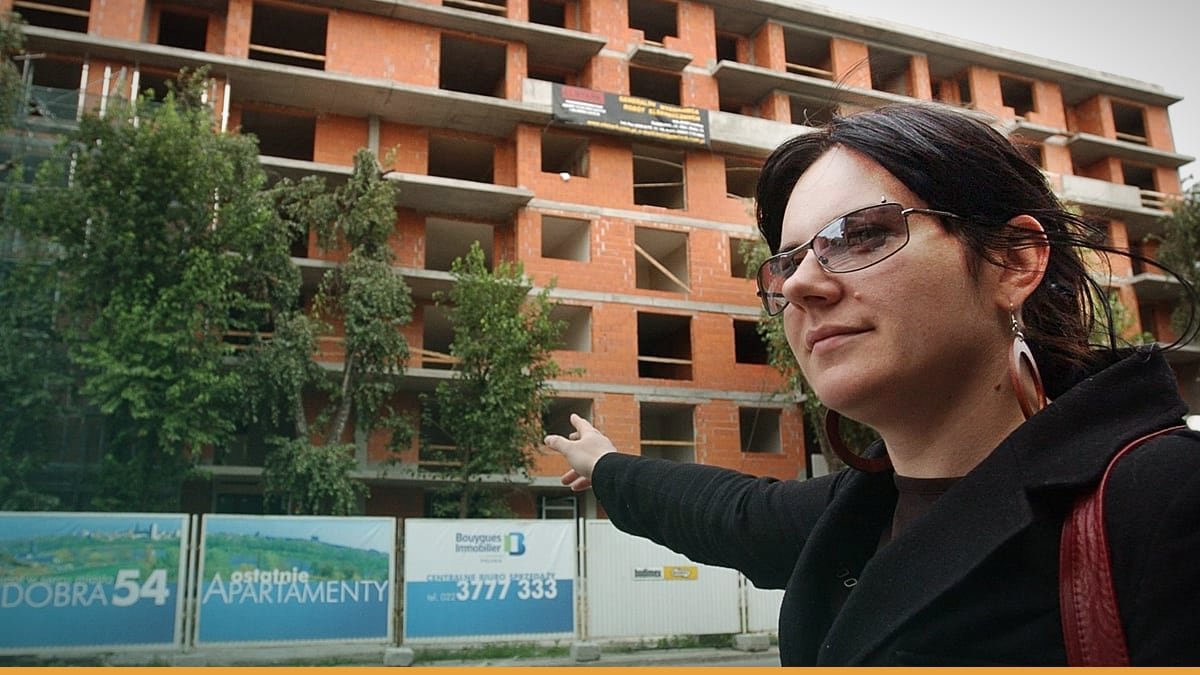
Header image source: Locked out: Why young Europeans can’t afford to buy homes via Yahoo Finance via Google — cropped to 16:9 and colour-adjusted.
Key takeaways
- Structural breakdown in Europe’s housing market locks young generations out of homeownership
- Stagnant wages, rising rates and chronic undersupply create a permanent crisis
- Consequences include delayed life milestones, demographic decline and political instability
2% in 2021 to 4.1% by mid-2023. They’re a betrayal.
These aren’t minor fluctuations. They represent a structural breakdown in how Europe’s housing market functions. And unlike past economic downturns, this isn’t temporary. It’s permanent. It threatens to redefine what it means to be middle-class on the continent.
The Generational Divide: How Europe’s Youth Are Falling Behind
Not because they’re to blame. Because their experience exposes just how broken the system has become. In Southern Europe, where homeownership was once nearly universal, the decline is even more dramatic. Even in countries with traditionally lower homeownership rates—Germany, Austria—the trend is the same. Younger generations are falling further behind.
What’s driving this isn’t laziness or a sudden aversion to property. It’s math. 2. These aren’t outliers. They’re the new normal. Wages have grown in nominal terms. But for young workers, they’ve stagnated or even declined in real terms. Germany: young workers’ real wages have actually fallen by 1.1% annually over the same period. The result? Even when young Europeans save diligently, the down payment on a home grows faster than their bank balances.
This isn’t just about housing. Homeownership has long been Europe’s primary vehicle for wealth accumulation. A way to build equity. Pass financial security down to the next generation. When that ladder gets pulled up, the consequences ripple across everything—family formation, retirement savings, even political stability. A generation that can’t buy homes is a generation that can’t build wealth. A continent where wealth concentrates in the hands of older homeowners is a continent headed for trouble.
The Interest Rate Squeeze: How Borrowing Costs Became a Dealbreaker
The ECB’s rate hikes weren’t arbitrary. Inflation was surging. Central banks had to act. But the timing couldn’t have been worse for Europe’s would-be homebuyers. These aren’t hypotheticals. They’re the real numbers facing young Europeans right now.
The impact isn’t just on monthly payments. Higher rates have triggered a tightening of lending standards across the continent. Banks, spooked by the prospect of defaults in a high-rate environment, are demanding larger down payments and stricter debt-to-income ratios. For a generation already struggling to save, these new hurdles are insurmountable.
The irony? Many young Europeans could have afforded homes just a few years ago. Wages haven’t kept pace. Rents have. Little room to save for a down payment. It’s a double bind: high rents prevent saving. High mortgage rates prevent borrowing. The only way out? A windfall inheritance. Or a radical policy intervention.
The Supply Crisis: Why Europe Isn’t Building Enough Homes
High prices and high rates are symptoms. The deeper problem: Europe isn’t building enough homes. The continent faces a structural undersupply that predates the current crisis but has been exacerbated by it. These aren’t abstract numbers.
The roots of this shortage trace back to the 2008 financial crisis. After the housing bubble burst, construction across Europe ground to a halt. Investment in new housing plummeted. It never fully recovered. Even now, completions are barely half of what they were pre-crisis. In Germany, the situation is worse.
But it’s not just post-crisis caution. Europe’s housing shortage is also a policy failure. Zoning laws. NIMBYism. Bureaucratic red tape. They’ve strangled new development. The city’s infamous Mietendeckel debate—tenants vs. Further squeezing supply.
Then there’s the investor factor. Across Europe, institutional landlords and private equity firms have snapped up swaths of the housing market. Turning homes into financial assets rather than places to live. These purchases aren’t just driving up prices. They’re changing the nature of homeownership itself. When a generation’s primary competition for housing is a hedge fund, the dream of owning a home starts to feel like a fantasy.
The Mortgage Credit Crunch: Why Banks Are Saying No
Even if young Europeans could save enough for a down payment, banks are increasingly reluctant to lend. The combination of rising rates, economic uncertainty, and precarious employment has made lenders far more risk-averse. Italy: 15% to 28%.
The problem isn’t just about credit scores. It’s about the nature of work itself. Europe’s labour market has become increasingly fragmented. Gig work. Temporary contracts. Freelance arrangements. They’re replacing stable, full-time employment. For banks, these arrangements are red flags. Lenders prefer borrowers with steady, predictable incomes. Young Europeans, even those earning good money, often don’t fit the mold.
The result is a Catch-22. Young Europeans need mortgages to buy homes. But banks won’t give them mortgages because they don’t have stable jobs. Without stable jobs, they can’t save enough for larger down payments. Which would make them more attractive borrowers. It’s a vicious cycle. One that’s only getting worse as the gig economy expands.
Governments have tried to intervene. Shared-equity mortgages. The state takes a stake in the home to reduce the buyer’s debt burden. But these programs are bandaids. Not solutions. They don’t address the underlying supply crisis. They often come with strict eligibility criteria that exclude many young workers.
The Demographic Time Bomb: What Happens When a Generation Can’t Buy?
The consequences of Europe’s housing crisis extend far beyond economics. When a generation can’t buy homes, they delay life’s milestones. Marriage. Children. Even moving out of their parents’ houses. In Spain, it’s 37. These delays have profound implications for Europe’s demographic future. Birth rates across the continent are already at historic lows. Unaffordable housing is making the problem worse.
Then there’s the urban exodus. Faced with sky-high rents and unaffordable mortgages, young Europeans are fleeing cities for cheaper rural areas. Or leaving Europe entirely. In Germany, the trend is even more pronounced. For those who can’t or won’t move, there’s emigration. Many bound for Latin America or Northern Europe, where wages are higher and housing is cheaper.
The political fallout is already visible. Won support from young voters disillusioned with mainstream parties. Quickly expanded to include demands for lower rents and more affordable housing. Across Europe, housing has become a flashpoint for generational conflict. Young voters are increasingly turning to populist or radical parties that promise to address their economic grievances.
Policy Prescriptions: What Could Actually Fix This?
The scale of Europe’s housing crisis demands bold solutions. Not incremental tweaks. The question is whether policymakers have the will to implement them. Here are some of the most talked-about ideas. And their potential pitfalls.
Interest Rate Relief
One obvious solution: make mortgages cheaper. Governments could offer subsidized loans to first-time buyers. Central banks could introduce targeted rate cuts for young borrowers. But Denmark’s system is unique. Replicating it elsewhere would require major reforms to Europe’s mortgage markets. Subsidized loans risk inflating demand without addressing supply. Leading to even higher prices.
Public Housing Expansion
Vienna’s social housing model is often held up as a gold standard. Rents are capped at affordable levels. The result? Vienna consistently ranks as one of the most livable cities in the world. Low homelessness. High quality of life. But Vienna’s success is built on a century of public investment. Replicating it elsewhere would require massive upfront costs.
Rent Control vs. Supply-Side Solutions
Rent control is a popular short-term fix. But it’s a double-edged sword. While it can provide immediate relief for tenants, it also discourages new construction. Can lead to housing shortages. The lesson? Rent control can buy time. But it doesn’t solve the underlying problem. The only long-term solution is to build more homes. That means tackling zoning laws. NIMBYism. Bureaucratic red tape.
Inheritance and Wealth Taxes
Europe’s housing crisis is also a wealth inequality crisis. Older generations bought homes when prices were low. Their wealth has soared. Younger generations locked out of the market are falling further behind. One way to address this: inheritance taxes. Wealth taxes that redistribute housing wealth. But such measures are politically contentious. Older voters—who turn out in higher numbers—are unlikely to support them.
The EU’s Role
Housing is traditionally a national issue. But the scale of Europe’s crisis suggests Brussels could play a role. The EU could incentivize member states to reform zoning laws. Provide funding for affordable housing projects. A drop in the bucket compared to what’s needed. A more radical approach: create an EU-wide mortgage market. Similar to the U.S., where 30-year fixed-rate loans are standard. But this would require harmonizing mortgage laws across 27 countries. A herculean task.
The Global Context: Is Europe’s Crisis Unique?
Europe’s housing crisis isn’t happening in a vacuum. Similar struggles are playing out across the developed world. With key differences.
In the U.S., Millennials face many of the same challenges. Stagnant wages. High prices. Tight lending standards. But the U.S. has advantages: 30-year fixed-rate mortgages. A culture of suburban sprawl. They keep prices lower outside major cities. A decline. But not as steep as Europe’s.
Canada and Australia are in worse shape. Both countries have seen homeownership rates for young adults plummet. Both are grappling with the political fallout. But these measures haven’t stopped prices from soaring.
The Nordic countries offer a glimmer of hope. Finland: heavy investment in public housing. Well above the European average. But even here, affordability is becoming a growing concern. Stockholm: home prices have risen 60% since 2015. Young Swedes are increasingly turning to shared-equity schemes to get on the ladder.
Emerging markets present a different picture. Eastern Europe: homeownership rates remain high. But partly because wages are low and mortgages are less common. Turkey: inflation has eroded savings. Young people increasingly rely on family support to buy homes. But even here, the trend is clear. As urbanization accelerates, housing is becoming less affordable.
The Long-Term Outlook: Will Gen Z Ever Own Homes?
The most pressing question: Is Europe’s housing crisis temporary or permanent? If interest rates fall and supply increases, things could improve. But don’t bet on a return to the pre-2008 era. The structural factors driving this crisis—stagnant wages, precarious work, NIMBYism, underinvestment in housing—aren’t going away anytime soon.
The best-case scenario: gradual improvement. If the ECB cuts rates in 2024, mortgage affordability could ease slightly. If governments ramp up housing construction, supply could start to catch up with demand. But even then, homeownership will remain out of reach for many young Europeans. The dream of owning a home may no longer be a rite of passage. A privilege reserved for the lucky few.
The worst-case scenario: a permanent renter class. A generation locked out of homeownership for life. This would have profound implications for Europe’s social contract. Homeownership has long been a cornerstone of economic stability, political engagement, and intergenerational wealth. Without it, younger Europeans may become a transient, rootless generation. Moving from rental to rental without ever putting down roots. The political consequences could be explosive. Already, we’re seeing the rise of housing-focused movements across the continent. If the crisis deepens, these movements could evolve into something far more radical.
There’s also the wildcard of remote work and AI. As more jobs become location-independent, young Europeans may flee high-cost cities for cheaper areas. Or even other countries. This could reshape housing demand. But it won’t solve the underlying problem. AI could boost productivity and wages. But it could also accelerate job displacement. Leaving even fewer young people with stable incomes.
The most uncomfortable truth? This isn’t just a housing crisis. It’s a crisis of intergenerational fairness. Older Europeans bought homes when prices were low. Their wealth has soared. Younger Europeans locked out of the market are falling further behind. The question isn’t just whether Gen Z will ever own homes. It’s whether Europe can afford a future where an entire generation is permanently excluded from the middle class.