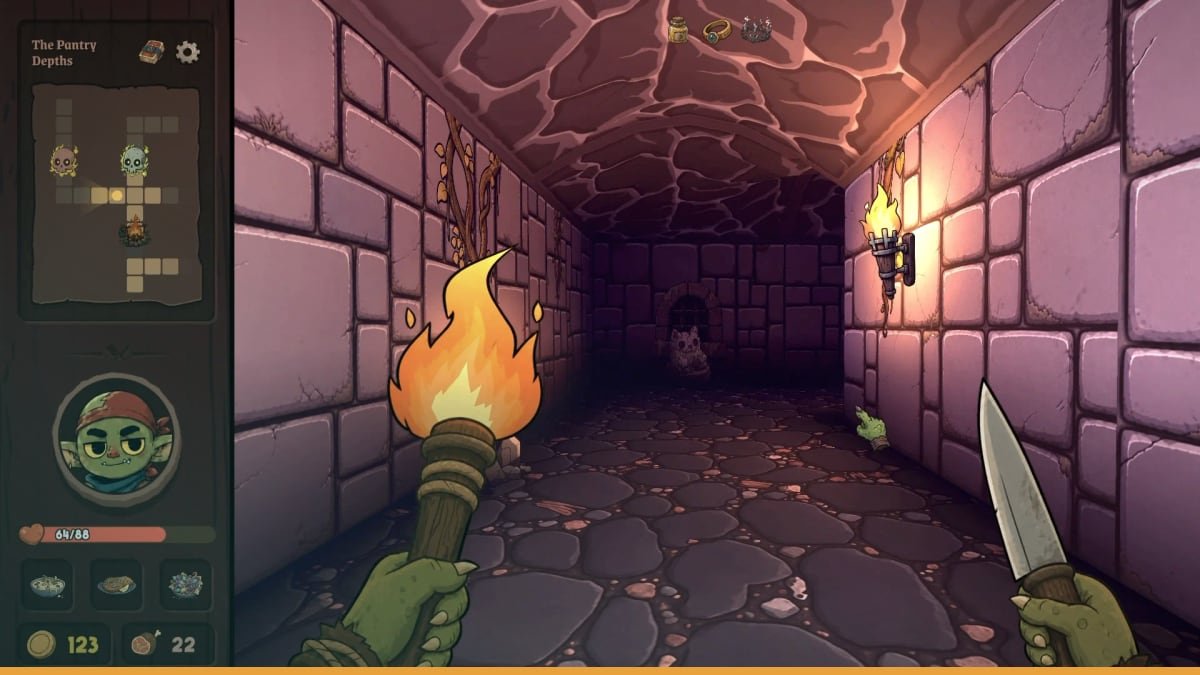
Header image source: Made a trailer for my 100% vibe coded game! via Reddit via Google — cropped to 16:9 and colour-adjusted.
Key takeaways
- Vibecade hosts AI-generated indie games using natural language prompts
- Claude Code can scaffold entire games from single prompts in minutes
- Vibe coding lowers barriers but risks homogenization and skill erosion
Leo just pocketed $25,000 for a game he built in 15 days. Not 15 days of wrestling with Unity or debugging C#. Fifteen days of talking to an AI. No engine tutorials. No syntax errors. Just prompts fed into Claude Code, and out came a Three.js game polished enough to win Vibejam 2026. This isn’t a tech demo. It’s not a prototype gathering dust in some dev’s portfolio. This is a finished product—one that earned real money on Vibecode.game, a platform for vibe-coded games.
This isn’t just another no-code gimmick. It’s a fundamental shift in how games get made. And Vibecade isn’t just another indie storefront. It’s the first proof that natural language can replace traditional coding as the primary tool for game creation. That’s not incremental. That’s revolutionary.
What Is Vibe Coding? The Technical Breakdown
Vibe coding means creating games using natural language prompts with AI tools—without writing a single line of traditional code. You describe what you want—mechanics, aesthetics, systems—and the AI generates functional code in real time. He prompted Claude Code, and the AI handled the rest.
This isn’t drag-and-drop visual scripting like Unity’s Bolt or Unreal Blueprints. Those still require you to assemble logic nodes, understand flow control, and debug visual graphs. Vibe coding doesn’t even ask you to do that. You don’t need to know what a coroutine is. You just need to describe what you want to happen.
The core tool here is Claude Code, an AI assistant trained on vast amounts of code and documentation. It integrates with frameworks like Three.js, the Playdate SDK, and even Roblox’s abstraction layers. But it’s not just about generating snippets. Claude Code can scaffold entire projects from a single prompt. Leo’s winning game started with a prompt describing a physics-based puzzle platformer. From there, he iterated via follow-up prompts to refine gameplay mechanics and add features.
This workflow is a radical departure from traditional development. No project setup. No build pipelines. No digging through Stack Overflow for syntax errors. Just pure, iterative design. But—and this is crucial—it’s not magic. The development process included debugging. AI-generated code often needs refinement for performance, edge cases, or complex logic.
The key distinction between vibe coding and no-code/low-code tools is agency. With no-code, you’re assembling pre-built components within the constraints of a visual interface. With vibe coding, you’re describing outcomes, and the AI generates bespoke code tailored to your vision. It’s closer to pair programming with an infinitely patient senior developer who never sleeps.
The $25,000 Case Study: How Leo Built a Game in 15 Days
Leo’s winning game is a Three.js project created entirely through Claude Code. His Medium post documenting the process reveals a timeline that should make traditional developers nervous:
- Day 1–3: Ideation and core mechanics. Leo prompted Claude Code to generate the game’s foundation. The AI produced a functional prototype in minutes. He then iterated on the feel through follow-up prompts. By the end of Day 3, he had a playable core loop.
- Day 4–7: Level design. Instead of manually placing platforms, Leo described the levels in prompts. Claude Code generated the level layouts, which Leo then tweaked in a text editor.
- Day 8–12: Debugging. Here’s where the AI’s limitations surfaced. The generated code had issues with collision detection and physics edge cases. Leo spent these days refining the implementation by adjusting prompts to guide Claude Code toward better solutions.
- Day 13–15: Polish. Leo added art and audio assets using prompts. The game was submitted to Vibejam.
The most striking part of Leo’s process isn’t the speed—it’s the complete absence of traditional coding. He described what he wanted, and the AI handled the implementation. That’s not just a workflow improvement. It’s a paradigm shift.
But let’s be clear: Leo’s game wasn’t a AAA blockbuster. It was a polished, fun indie game with a clear vision. The $25,000 prize proves that vibe-coded games can compete in quality, but it also raises uncomfortable questions. How much of Leo’s success was due to his design skills versus the AI’s capabilities? Would a less experienced developer have produced something as cohesive? And crucially, what happens when thousands of creators flood Vibecade with AI-generated games?
Vibecade’s Role: Marketplace, Community, or Gateway Drug?
Vibecade isn’t just hosting Leo’s game. It’s positioning itself as the central hub for vibe-coded games. The platform, available at vibecode.game, hosts vibe-coded games and developer profiles. Here’s what it offers:
- Discovery: Users can browse games tagged by the vibe coding tools used to create them—Claude Code, Roblox abstractions, Playdate SDK, etc. This is a smart move. It turns the AI tools into a selling point, not just a behind-the-scenes assistant.
- Game Jams: Vibejam 2026 is a competition where Leo won $25,000. Vibecade hosts regular jams with cash prizes, incentivizing creators to experiment with vibe coding.
- Developer Profiles: Creators can showcase their prompt engineering skills, share workflows, and build a following. This mirrors platforms like itch.io but with a focus on AI-assisted development.
- AI Tool Integrations: Vibecade isn’t just a storefront. It’s tightly integrated with Claude Code and other AI tools, offering tutorials, prompt templates, and even in-browser testing for generated code.
But Vibecade isn’t without gaps. The brief doesn’t specify how monetization works. Does Vibecade take a cut of sales? Is it subscription-based? Are there premium features for developers? There’s also no data on user growth or retention. How many games are uploaded daily? How many developers are active? Without these details, it’s hard to gauge whether Vibecade is a niche experiment or the next big indie platform.
Compare Vibecade to itch.io, the current king of indie game marketplaces. Itch.io is tool-agnostic—it doesn’t care if you used Unity, Godot, or a custom engine. Vibecade, by contrast, is laser-focused on AI-assisted games. That’s both its strength and its risk. Strength, because it creates a curated space for vibe-coded games. Risk, because it’s betting big on a single workflow that may or may not scale.
Then there’s Roblox. The brief mentions that Roblox’s abstraction layers are vibe-coding-friendly, but Roblox’s economy is dominated by studios, not solo creators. Vibecade is targeting the opposite end of the spectrum: individual developers who want to ship games without a team. That’s a smart niche, but it’s also a crowded one. Will Vibecade remain a boutique platform, or can it grow into something bigger?
The Playdate Experiment: Vibe Coding on Hardware
Vibe coding isn’t limited to web or PC games. A developer named Math Professor created a Playdate game using vibe coding techniques, as documented in a Playdate Dev Forum thread. This is fascinating because the Playdate is a constrained, hardware-specific platform. It runs on a custom Lua-based SDK, has limited memory, and uses a crank for input. If vibe coding can work here, it can work anywhere.
The developer described their process:
- Prompting for Mechanics: They started with simple prompts. Claude Code generated Lua code that worked, but it needed manual tweaks to handle edge cases like crank sensitivity and screen wrapping.
- Debugging Hardware Constraints: The AI struggled with Playdate’s memory limits. Prompts to add particle effects generated code that ran too slowly. The developer had to refine the prompts to be more specific.
- Final Polish: The game was playable but required manual optimizations for performance. The developer noted that vibe coding got them 80% of the way there, but the last 20% required traditional debugging.
This case study highlights both the promise and the limitations of vibe coding. It’s viable for hardware-specific development, but it’s not a silver bullet. You still need domain knowledge—understanding memory constraints, input systems, and performance bottlenecks—to guide the AI effectively. Vibe coding lowers the barrier to entry, but it doesn’t eliminate the need for expertise.
That said, the Playdate experiment is a glimpse into the future. If vibe coding can work on a niche handheld, it can work on consoles, mobile devices, and even VR. The question is whether platforms like Vibecade will expand to support these use cases—or whether they’ll remain focused on web-based games.
The Dark Side of Vibe Coding: Homogenization and Skill Erosion
Vibe coding isn’t all sunshine and $25,000 prizes. It comes with real risks—risks that could shape the future of indie game development.
Risk 1: Derivative Games
AI tools like Claude Code default to "safe" implementations. The AI doesn’t invent new design paradigms. It remixes what it’s seen before. This isn’t a flaw in the tool—it’s a limitation of the training data. But it means that vibe-coded games risk feeling samey, especially if developers don’t push beyond the AI’s defaults.
Vibecade’s curation will be critical here. The brief doesn’t specify how Vibecade filters low-effort or AI-spam games. Does it have a manual review process? Are there community voting mechanisms? Without curation, Vibecade could become a graveyard of derivative experiences, drowning out the gems like Leo’s game.
Risk 2: Devaluing Traditional Skills
Developers who spent years learning Unity, C#, or Godot may find themselves struggling to compete on speed. Why spend months coding a prototype when a vibe coder can generate one in days? This isn’t just about job security—it’s about the value of craft. If AI can replicate 80% of a junior developer’s work, what happens to entry-level roles?
The counterpoint is that vibe coding doesn’t eliminate the need for expertise. Leo’s game won $25,000 because of his design skills, not just the AI’s capabilities. A vibe coder with no sense of pacing, balance, or aesthetics will still produce a bad game. But the bar for "good enough" is dropping. And that’s a problem for developers who invested in traditional skills.
Risk 3: Legal Gray Areas
AI-generated code may inadvertently reuse snippets from training data. What if Claude Code generates code that’s nearly identical to a copyrighted algorithm? Who’s liable—the developer, the AI provider, or Vibecade? The brief doesn’t mention Vibecade’s stance on legal issues. Does it have a DMCA takedown process? Does it require attribution for AI-generated assets? These questions need answers.
There’s also the question of originality. Vibecade could become a hotbed of unintentional plagiarism, where games are identical not because of malice, but because the AI’s outputs converge on the same solutions.
Who Wins in the Vibe Coding Economy?
Vibe coding isn’t a zero-sum game. Some will win big. Others will struggle. Here’s the breakdown:
Winners
- Non-Programmers: Artists, writers, and designers can now prototype and ship games without learning to code. This is the biggest democratization of game development since the rise of engines like Unity. A poet with no technical skills can now create a narrative game. A musician can design a rhythm-based platformer. The indie scene is about to get a lot more diverse.
- Tool Providers: Claude Code, Roblox, and other AI platforms will see increased adoption. As vibe coding grows, these tools will become essential for developers—like Photoshop for artists or Pro Tools for musicians.
- Indie Scene: More voices mean more unique games. Vibe coding could enable genres and mechanics that wouldn’t justify the time investment of traditional development. Imagine a game where the narrative adapts to the player’s mood, generated in real time by AI. That’s not feasible with manual coding. With vibe coding, it’s just a prompt away.
Losers
- Junior Devs: Entry-level jobs may shrink if studios adopt vibe coding for prototyping. Why hire a junior developer to build a prototype when an AI can generate one in hours? This doesn’t mean junior devs will disappear, but their roles may shift toward refining AI-generated code rather than writing it from scratch.
- Traditional Engines: Unity and Unreal could lose indie users to AI-assisted workflows. If vibe coding becomes the default for solo developers, engines that require manual coding may see a decline in adoption.
- Players: The risk of market saturation is real. If Vibecade becomes flooded with low-effort, AI-generated games, discovery will become harder. Players may struggle to find the gems amid the noise.
Vibecade’s role in this ecosystem is pivotal. If it doesn’t, it risks becoming a graveyard of derivative content.
The Future: Will Vibe Coding Replace Traditional Development?
Short-term (2024–2026), vibe coding will remain a tool for indie developers and experimental projects. Vibecade and Vibejam will drive adoption, but most vibe-coded games will be small, personal, and niche. AI tools will improve at handling edge cases—multiplayer networking, procedural generation, dynamic narratives—but they won’t replace traditional development for complex projects.
Long-term (2027+), hybrid workflows will emerge. Developers will use vibe coding for prototyping, then manually refine the code for polish. AAA studios may resist vibe coding for core development, citing reliability concerns, but they’ll adopt it for rapid iteration. New genres will appear—mechanics that are too tedious to code manually but trivial to prompt, like games that adapt to the player’s biometric data or real-world weather.
But the biggest shift won’t be technical. It’ll be cultural. Vibe coding will change what it means to be a game developer. Today, coding is a gatekeeper. Tomorrow, it’ll be just one skill among many. The best developers won’t be the ones who write the cleanest code. They’ll be the ones who prompt the most creative outcomes.
That said, vibe coding won’t replace traditional development entirely. There will always be a place for hand-crafted code—just as there’s still a place for hand-crafted art in the age of Photoshop. The question is whether vibe coding will carve out its own niche or become the dominant paradigm.
How to Get Started with Vibe Coding
Ready to dive in? Here’s a practical guide to your first vibe-coded game:
Tools to Try
- Claude Code: The tool Leo used to win $25,000. Best for general-purpose game development. Works with Three.js, Playdate SDK, and other frameworks.
- Playdate SDK: For hardware-focused vibe coding. See the "Math Professor" case study for inspiration.
- Roblox Studio: Leverages abstraction layers that are vibe-coding-friendly. A great entry point if you’re new to game development.
Prompting Tips
- Be Specific:
- Iterate: Start with core mechanics, then refine via follow-up prompts.
- Debug Manually: AI-generated code often needs tweaks for performance or edge cases. Don’t expect it to be perfect on the first try.
Workflow Example
- Concept:
- Core Mechanics:
- Refine:
- Polish:
Resources
- Vibecode.game’s Developer Forums: Share prompts, get feedback, and learn from other creators.
- Leo’s Medium Post: A step-by-step breakdown of his 15-day process.
- Playdate Dev Forum’s Vibe Coding Thread: Tips for hardware-specific development.
The Big Question: Is Vibe Coding Good for Games?
The Case For
- Democratization: Lowers the barrier to entry, enabling more diverse creators. A poet can make a game. A musician can design a rhythm-based experience. The indie scene will never be the same.
- Speed: Prototyping in days instead of months. Leo’s 15-day game is just the beginning. Imagine a jam where developers ship games in 48 hours—without sacrificing quality.
- Experimentation: Encourages wild ideas that wouldn’t justify manual coding time. Want to make a game where the levels generate based on the player’s Spotify playlist? With vibe coding, it’s just a prompt away.
The Case Against
- Quality: AI-generated games may lack the depth of hand-crafted experiences. There’s a difference between a game that works and a game that feels special.
- Originality: Risk of homogenization if developers rely on AI’s "safe" defaults. How many vibe-coded Metroidvanias will feel identical?
- Sustainability: If vibe coding floods the market, discovery and monetization could become harder. Vibecade could become a graveyard of derivative games.
My Take
Vibe coding won’t replace traditional development. It will carve out a permanent niche, like photography’s shift from film to digital. The winners will be platforms like Vibecade that balance accessibility with curation. The losers will be those who treat it as a shortcut rather than a tool.
The most exciting possibility? Vibe coding could enable games that wouldn’t exist otherwise. Not because they’re technically impressive, but because they’re creatively bold. A game designed by a poet. A rhythm game built by a musician. An interactive story written by a novelist. That’s not just a shift in workflow. It’s a shift in who gets to make games.
The question isn’t whether vibe coding is here to stay. It’s whether the indie scene is ready for it. And if Vibecade’s $25,000 prize is any indication, the answer is already echoing back.